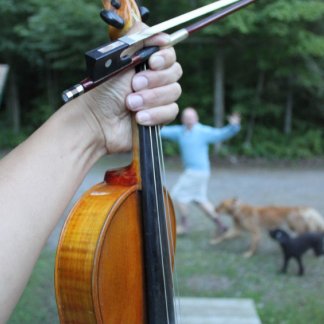
Cooking Concert — When Music and Cuisine Become One Experience
What happens when the concert doesn’t end when the music stops?
Usually, the performer takes a bow, thanks the audience, and leaves the stage.
But in a Cooking Concert, the story continues.
After the violin performance, Frank Kim puts down his violin and begins to cook.
The audience, who have just been listening to his music, now watch as he prepares a dish right in front of them — and then share the food together.
It is not simply a concert followed by a meal.
It is an experience in which music and cuisine become part of the same performance.
When the Music Ends, the Cooking Begins
What makes Cooking Concert different is that the music and the food are not separate events.
First comes the violin.
The audience listens to the music, follows the sound, watches the movement of the bow, and feels the rhythm and breath of the performer.
Then, when the performance comes to an end, another part of the evening begins.
Frank Kim moves from the violin to the kitchen and starts preparing the food himself.
The hands that were just moments ago moving the bow now begin working with a knife and fresh ingredients.
The hands that make music now make food.
This is one of the defining images of the Cooking Concert.
The First Story — Lotus & Abalone
One of the Cooking Concerts was titled “Lotus & Abalone.”
For this performance, the featured ingredient was fresh abalone from Wando, Korea.
After the violin performance, Frank Kim personally prepared the abalone and served it to the audience as sashimi.
Abalone does not necessarily need elaborate cooking to reveal its character. Its freshness, delicate texture, and natural flavor are part of what makes it special.
For this reason, the abalone was served as sashimi, allowing the ingredient itself to take center stage.
The audience had just listened to live violin music. Then, right there in the same space, they watched the abalone being prepared and finally tasted it.
They heard the music, watched the cooking, and experienced the food.
A concert became a multi-sensory experience.
Every Cooking Concert Can Be Different
There is no fixed menu and no permanent musical program for Cooking Concert.
The music can change from one performance to another.
The food can change as well.
One evening might revolve around the music of a particular composer. Another might begin with a single ingredient, a dish, or a culinary idea.
The relationship between the music and the food can also change.
Rather than repeating the same performance, Cooking Concert is an opportunity to create something new for each occasion — shaped by the music, the food, the setting, and the people who are there.
The Audience Can Become Part of the Idea
The music and cuisine of Cooking Concert begin with Frank Kim’s own ideas and sensibility.
But guests are also welcome to bring their own inspiration.
Perhaps there is a composer whose music they love.
Perhaps there is a particular dish that carries a special memory.
Perhaps they simply wonder what it would be like to experience a certain kind of music alongside a certain kind of food.
A simple suggestion can become the starting point for a new Cooking Concert.
In that sense, the performance becomes more than something created by the performer alone.
It becomes a story created between the artist and the audience.
Violin and Cooking
At first, the violin and cooking may seem like completely different worlds.
But look more closely, and they share something fundamental.
Both are made by hand.
The sound of a violin comes from the movement of the fingers, the bow, and the body of the instrument.
The character of a dish also emerges through the hands — through the way ingredients are handled, prepared, and brought together.
In both music and cooking, the quality of the materials matters.
For a violinist, there are the instrument, bow, strings, and the acoustic space.
For a cook, there are the ingredients — their freshness, texture, and condition.
And perhaps most importantly, both depend on the sensitivity of the moment.
The same violin can sound slightly different from one performance to the next.
The same ingredients can produce a different result depending on their condition, the surroundings, and the hands preparing them.
Cooking Concert is therefore not simply about placing music and food side by side.
It is about connecting two forms of hands-on artistic expression into one shared experience.
When the Concert Ends, the Memory Remains
Music disappears into the air when a concert is over.
But it remains in memory.
With Cooking Concert, something else becomes part of that memory.
The sound of the violin is remembered alongside the taste, texture, and aroma of the food served that evening.
Years later, someone might remember:
“I remember that violin performance.”
And perhaps, at the same time:
“And I remember that abalone.”
The music and the food become part of the same memory.
Cooking Concert
Frank Kim — Violin & Cooking
He plays the violin.
He cooks the food.
And he shares the experience with the audience.
Cooking Concert is a concert you hear, see, taste, and remember.
Every performance can bring a different piece of music, a different ingredient, and a different story.
This time, it was “Lotus & Abalone.”
What music will be played next?
What will be prepared next?
The answer will be created on the next stage.
[Booking inquiries] : violinfoundationorg@gmail.com
#CookingConcert #FrankKim #FrankKimViolin #ViolinAndCooking #LotusAndAbalone #AbaloneSashimi #WandoAbalone
Cooking Concert — 음악과 요리가 하나의 무대가 되는 순간
콘서트가 끝난 뒤, 연주자는 무대에서 내려와 어디로 갈까?
보통은 관객에게 인사를 하고 무대를 떠난다.
하지만 Cooking Concert에서는 이야기가 조금 다르다.
연주가 끝난 뒤에도 무대는 끝나지 않는다.
바이올리니스트 Frank Kim은 바이올린을 내려놓고 직접 요리를 시작한다. 그리고 방금 전까지 음악을 듣던 관객들은 이번에는 그가 만든 음식을 함께 맛본다.
음악을 듣는 것에서 끝나는 것이 아니라, 음악과 음식을 하나의 공연 안에서 경험하는 것이다.
음악 다음에 요리가 시작된다
Cooking Concert의 가장 특별한 점은 음악과 요리가 서로 분리되어 있지 않다는 것이다.
먼저 바이올린 연주가 있다.
관객은 음악을 듣고, 소리를 느끼고, 연주자의 움직임과 호흡을 바라본다.
그리고 연주가 끝나면 또 다른 장면이 시작된다.
Frank Kim이 직접 주방으로 이동해 재료를 준비하고 요리를 한다.
연주자의 손이 활을 움직이던 손에서 칼과 식재료를 다루는 손으로 바뀐다.
음악을 만들던 손이 음식을 만든다.
이것이 Cooking Concert가 가지고 있는 가장 독특한 장면이다.
첫 번째 이야기 — 연꽃과 전복
이번 Cooking Concert의 제목은 **「연꽃과 전복」(Lotus & Abalone)**이었다.
이번 공연에서 선택한 음식은 한국 완도산 전복이었다.
공연 후 Frank Kim은 완도 전복을 직접 손질하고 사시미로 준비해 관객에게 제공했다.
전복은 특별한 조리 과정을 거쳐 복잡한 맛을 만들어내는 음식이라기보다, 신선한 재료 자체의 식감과 풍미가 중요한 음식이다.
그래서 이번 공연에서는 전복을 사시미로 준비했다.
관객은 바이올린 음악을 들은 뒤, 바로 그 자리에서 준비되는 전복을 바라보고 맛보았다.
귀로 음악을 듣고, 눈으로 요리의 과정을 보고, 마지막에는 입으로 음식을 경험한다.
하나의 공연이 여러 감각으로 확장되는 순간이었다.
Cooking Concert는 매번 달라진다
Cooking Concert에는 정해진 레퍼토리나 정해진 메뉴가 없다.
매 공연마다 음악도 달라질 수 있고, 음식도 달라질 수 있다.
어떤 날에는 특정 작곡가의 음악이 중심이 될 수 있고, 또 어떤 날에는 하나의 음식이나 식재료가 공연의 출발점이 될 수도 있다.
음악과 음식이 서로 연결되는 방식 역시 공연마다 달라진다.
그래서 Cooking Concert는 같은 공연을 반복해서 보여주는 형식이라기보다, 그날의 음악과 음식, 그리고 그 자리에 있는 사람들을 위해 만들어지는 하나의 새로운 경험에 가깝다.
관객의 취향도 공연의 일부가 될 수 있다
Cooking Concert의 음악과 요리는 기본적으로 Frank Kim의 아이디어와 감각에서 출발한다.
하지만 관객이 원하는 음악이나 음식이 있다면 그것을 이야기해도 좋다.
좋아하는 작곡가가 있을 수도 있고, 특별히 기억에 남는 음식이 있을 수도 있다.
“이 음악과 이런 음식을 함께 경험해보고 싶다.”
그런 작은 아이디어 하나가 새로운 Cooking Concert의 주제가 될 수도 있다.
결국 공연은 연주자 혼자 만드는 것이 아니라 연주자와 관객 사이에서 하나의 이야기를 만들어가는 과정이 된다.
바이올린과 요리
바이올린과 요리는 서로 전혀 다른 영역처럼 보인다.
하지만 자세히 보면 공통점도 많다.
둘 다 손으로 만들어진다.
악기의 소리는 손가락과 활의 움직임에서 나오고, 음식의 맛과 형태 역시 손의 움직임과 감각을 통해 만들어진다.
둘 다 재료가 중요하다.
바이올린에서는 악기와 활, 현과 공간이 중요하고, 요리에서는 식재료의 신선도와 상태가 중요하다.
그리고 무엇보다 중요한 것은 그 순간의 감각이다.
같은 악기로 연주해도 매번 음악이 조금씩 달라지고, 같은 재료로 요리해도 그날의 상태와 손의 감각에 따라 결과가 달라진다.
그래서 Cooking Concert는 음악과 요리를 단순히 한 자리에 놓는 것이 아니다.
두 가지 예술적 행위를 하나의 경험으로 연결하는 것이다.
공연은 끝나도 경험은 남는다
콘서트의 음악은 공연이 끝나면 사라진다.
하지만 관객의 기억에는 남는다.
Cooking Concert에서는 여기에 하나가 더해진다.
그날 들었던 바이올린의 소리와 함께, 그날 먹었던 음식의 맛과 향이 기억에 남는다.
어쩌면 몇 년 뒤에도 이렇게 기억할 수 있을 것이다.
“그날 들었던 바이올린 음악이 좋았지.”
그리고 동시에,
“그날 먹었던 전복도 정말 특별했지.”
음악과 음식이 서로의 기억을 강화하는 것이다.
Cooking Concert
Frank Kim — Violin & Cooking
바이올린을 연주하고,
직접 요리하고,
관객과 함께 나눈다.
Cooking Concert는 음악을 듣는 콘서트이면서 동시에 음식을 경험하는 콘서트다.
그리고 매번 다른 음악과 다른 음식으로 새로운 이야기를 만든다.
이번에는 **「연꽃과 전복」**이었다.
다음 Cooking Concert에서는 어떤 음악이 연주되고, 어떤 음식이 만들어질까?
그 답은 다음 무대에서 만들어진다.
[Booking inquiries] : violinfoundationorg@gmail.com
#CookingConcert #FrankKim #FrankKimViolin #ViolinAndCooking #LotusAndAbalone #연꽃과전복 #바이올린 #전복사시미 #WandoAbalone