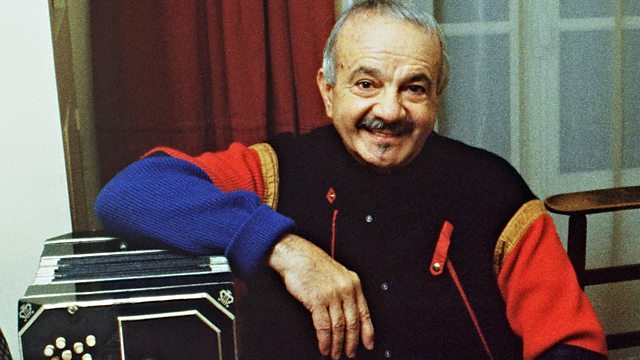
Description
Ástor Piazzolla – “Café 1930” from Histoire du Tango (1985)
“Café 1930” is the second movement of Ástor Piazzolla’s Histoire du Tango, composed in 1985 for flute and guitar.
The movement represents the tango of the 1930s, when tango increasingly developed from music primarily associated with dancing into music intended for listening. Compared with the earlier, more rhythmically driven tango style, “Café 1930” is slower, more lyrical, and more expressive, with greater emphasis on melody, harmony, and intimate musical dialogue.
The Role of the Guitar
The guitar is not simply a background accompaniment. It provides the harmonic foundation, rhythmic character, and atmosphere of the movement while creating space for the solo melodic instrument.
For a violinist using this track as accompaniment, the guitar must provide a clear and dependable musical framework without overpowering the expressive violin line.
Important elements include:
- A stable but flexible rhythmic pulse
- Clear articulation of the tango rhythm
- Precise coordination with the melodic line
- Careful control of dynamics and harmonic color
- Natural shaping of harmonic tension and release
- Sufficient space for the violinist’s expressive phrasing
Guitar Difficulty
The guitar part is moderate to moderately advanced in musical difficulty. It is not necessarily difficult because of extremely fast passages or virtuosic technique. The greater challenge lies in rhythmic precision, chord changes, articulation, balance, and expressive control.
The guitarist must maintain a consistent pulse while allowing the music to breathe. Small inaccuracies in rhythm or chord changes can immediately affect the violinist’s phrasing because the guitar establishes much of the harmonic and rhythmic framework.
Particular attention is required for:
- Clean and accurate chord changes
- Precise rhythmic placement
- Tango-style articulation
- Control of repeated rhythmic figures
- Dynamic balance with the violin
- Smooth harmonic transitions
- Maintaining musical tension during slower passages
For this reason, the part can be technically manageable for an experienced classical guitarist while still requiring substantial musical maturity to perform convincingly.
For Violinists
The violin carries the principal singing line, allowing the performer to shape the melody with expressive phrasing, subtle tango inflections, changes of tone color, and flexible timing.
The guitar accompaniment should therefore remain rhythmically reliable while leaving enough expressive space for the violin.
The result is not simply a soloist playing over accompaniment, but a dialogue between violin and guitar. The success of the performance depends on the two instruments responding to each other’s phrasing, dynamics, rhythm, and harmonic movement.
This accompaniment track is designed to provide a clear musical foundation for violinists who wish to study, rehearse, record, or prepare a performance of “Café 1930.”
High-Quality Guitar Accompaniment for Violin
Suitable for Violinists


Reviews
There are no reviews yet.