Description
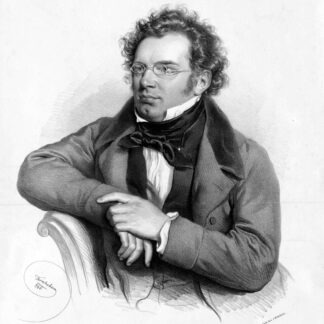
Franz Schubert – “Nacht und Träume,” D. 827, Op. 43 No. 2 (1823)
“Nacht und Träume” (“Night and Dreams”) is one of Franz Schubert’s most intimate and contemplative songs, composed in 1823 to a poem by Matthäus von Collin. The song portrays the quiet world of night, where dreams bring peace, beauty, and release from the disturbances of waking life.
The poem presents night and dreams as a realm of silence, rest, and transcendence. While the waking world is filled with movement and uncertainty, the night offers a moment in which the mind can withdraw from reality and enter a more peaceful inner world.
Schubert creates this atmosphere through an extraordinary sense of stillness and simplicity. The piano accompaniment is built from quiet, sustained harmonic movement that supports the vocal melody without drawing attention to itself. Above this restrained texture, the melody unfolds slowly and naturally, creating the impression of a private thought or whispered prayer.
The piano therefore does much more than provide harmonic support. Its restrained chords establish the quiet space of the night in which the melody exists. Rather than depicting physical movement, as in Auf dem Wasser zu singen, Schubert uses the piano to create an atmosphere of suspension, stillness, and inward reflection.
One of the most important features of the song is the relationship between silence and sound. The music rarely demands dramatic gestures. Instead, Schubert allows individual phrases to emerge gently from the surrounding silence. The pianist must therefore treat the spaces between phrases as an important part of the musical expression.
For the pianist, the greatest challenge is not technical virtuosity but control, restraint, and sensitivity. The accompaniment must remain soft and transparent while maintaining enough harmonic presence to support the melody. Excessive weight, pedal, or dynamic intensity can easily disturb the fragile atmosphere of the piece.
The pianist must also carefully shape the harmonic changes. Even when the accompaniment appears simple, each chord contributes to the emotional direction of the music. Subtle changes in voicing, touch, pedal, and dynamics allow the harmony to breathe beneath the melody without becoming conspicuous.
For a violin arrangement, this becomes particularly significant. The violin takes over Schubert’s vocal melody, while the pianist must preserve the original Lied character and its atmosphere of profound stillness. The violinist and pianist must coordinate phrasing, breathing points, vibrato, rubato, dynamics, and the delicate transitions between musical phrases.
The violin should therefore sound as though the melody is emerging from the silence rather than being projected over it. The pianist’s role is to create sufficient harmonic depth and continuity while leaving generous space for the violin’s singing tone.
In this respect, Nacht und Träume presents a very different musical world from Auf dem Wasser zu singen. Where the latter uses the continuous movement of the piano to evoke water, motion, and the passage of time, Nacht und Träume uses restraint and sustained harmony to evoke night, stillness, dreams, and inner peace.
“Nacht und Träume” is therefore not simply a song about sleep. It is a deeply intimate meditation on night, dreams, silence, peace, and the inner world of the human spirit. Schubert transforms a remarkably simple piano texture into an essential part of the poetic atmosphere, allowing the melody to float quietly within a world of darkness and dreams.
High-Quality Piano Accompaniment
Suitable for Singers
Suitable for Instrumentalists
Ideal for Practice, Rehearsal, Recording, and Performance Preparation





Reviews
There are no reviews yet.