Sale!

[High Quality Piano Accompaniment] Franz Schubert – Winterreise, D. 911, Op. 89, No. 24: “Der Leiermann” (1827)

$21.00 $11.00

[High Quality Piano Accompaniment] – Franz Schubert: Winterreise, D. 911, Op. 89, No. 24 “Der Leiermann” (1827)

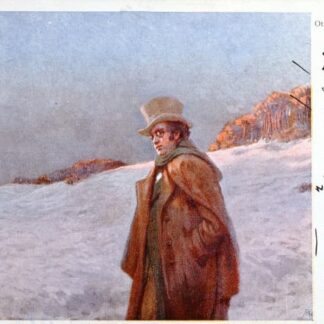
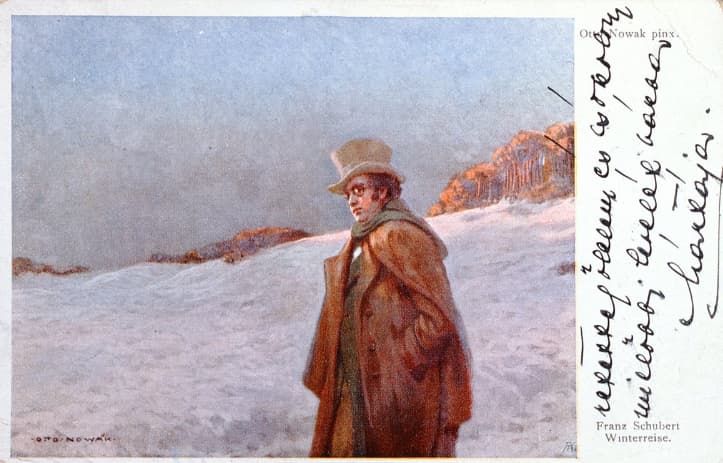
Der Leiermann (“The Hurdy-Gurdy Man”) is the final song of Franz Schubert’s Winterreise, D. 911, Op. 89, composed in 1827 to a poem by Wilhelm Müller. The song depicts an impoverished old hurdy-gurdy player standing barefoot on the ice, ignored by everyone around him. It brings the cycle to an extraordinarily stark and unresolved conclusion.

The piano accompaniment plays a uniquely important role in this song. Rather than providing a conventional harmonic accompaniment, Schubert uses the piano to imitate the continuous, mechanical sound of the Drehleier (hurdy-gurdy). The repeated figures and sustained drone-like sonorities create the impression of an instrument whose wheel continues to turn without stopping.

One of the greatest technical challenges for the pianist is maintaining the extreme consistency and mechanical regularity of the repeated accompaniment. The pianist must resist the temptation to make every repetition expressive or dramatically varied. The repeated figures should remain controlled, even, and restrained, creating the almost monotonous sound associated with the old street musician.

The accompaniment also requires careful control of touch, articulation, dynamics, and balance. Because the musical texture is deliberately sparse, even a small change in the weight of a note can significantly alter the atmosphere. The pianist must produce a sound that is clear and audible while leaving sufficient space for the vocal or instrumental melody.

The repetitive piano texture is closely connected to the physical image of the old man. As Müller writes:

“Barfuß auf dem Eise / wankt er hin und her”

(“Barefoot on the ice, he staggers back and forth.”)

The piano does not respond with a dramatic emotional outburst. Instead, it continues its repetitive motion. This creates a powerful contrast between the old man’s physical suffering and the seemingly indifferent persistence of the music.

Another important passage is:

“Und er lässt es gehen, / alles, wie es will, / dreht, und seine Leier / steht ihm nimmer still.”

(“And he lets it go, everything as it will; he turns, and his hurdy-gurdy never stops.”)

Here the piano’s continuous repetition becomes almost inseparable from the image of the hurdy-gurdy itself. The accompaniment seems to keep turning even when there is no audience, no payment, and no apparent purpose.

For a violin arrangement, this presents a particular interpretive challenge. The violin melody must preserve the loneliness and restraint of the original vocal line, while the pianist maintains the characteristic repetitive texture underneath. Excessive vibrato, rubato, or dramatic shaping can easily weaken the stark atmosphere of the original Lied.

The pianist and violinist must therefore coordinate phrasing, articulation, dynamics, timing, and the balance between melody and accompaniment with great precision. The piano should sound almost detached from conventional Romantic accompaniment, while the violin carries the human voice of the wanderer.

The final question,

“Wunderlicher Alter, soll ich mit dir gehn? / Willst zu meinen Liedern deine Leier drehn?”

(“Strange old man, shall I go with you? / Will you turn your hurdy-gurdy to my songs?”)

does not receive a conventional musical resolution. The piano’s repetitive motion contributes to this sense of uncertainty, leaving the listener with the impression that the wheel—and perhaps the journey itself—may continue beyond the final notes.

For this reason, Der Leiermann is one of Schubert’s most remarkable examples of the piano becoming an independent dramatic voice. The piano does not simply accompany the wanderer; it becomes the sound of the hurdy-gurdy, the sound of repetition, poverty, isolation, and music continuing despite the absence of an audience.

High-Quality Piano Accompaniment
Suitable for Singers
Suitable for Instrumentalists
Ideal for Practice, Rehearsal, Recording, and Performance Preparation

Description


Franz Schubert – Winterreise, D. 911, Op. 89, No. 24: “Der Leiermann” (1827)

Schubert’s “Der Leiermann”, the final song of Winterreise, presents one of the most stark and concentrated examples of piano accompaniment in the entire song cycle. The piano does not merely accompany the voice; it creates the sound-world of the Drehleier (hurdy-gurdy) played by the old street musician.

The accompaniment is built around a repetitive, drone-like texture. The persistent open intervals and repeated harmonic patterns create the impression of the hurdy-gurdy’s wheel turning continuously. Unlike a conventional lyrical piano accompaniment, the piano deliberately avoids expressive richness and instead produces a dry, mechanical, almost motionless sound.

The right and left hands work together to maintain the continuous drone-like motion, while the repeated figures remain remarkably restrained. This creates an important contrast with the singer’s vocal line: the voice describes the old man, but the piano seems to embody the old man’s instrument itself.

The piano’s technique is therefore based less on virtuoso display than on precision, repetition, balance, and sustained rhythmic consistency. The performer must keep the repeated figures extremely even and controlled, avoiding excessive rubato or romanticized expression. The mechanical regularity is essential to the character of the song.

The sparse texture also leaves considerable space around the vocal line. The piano does not attempt to dominate the singer; instead, its repetitive sound creates a bleak acoustic environment in which the voice can speak almost like a final monologue.

This is especially powerful in:

“Barfuß auf dem Eise / wankt er hin und her”

The piano’s cold, repetitive motion accompanies the image of the old man staggering barefoot across the ice. The physical suffering is mirrored not through dramatic gestures, but through the relentless continuation of the accompaniment.

Later, Schubert writes:

“Und er lässt es gehen, / alles, wie es will,
dreht, und seine Leier / steht ihm nimmer still.”

Here the unceasing piano pattern becomes almost symbolic. The old man continues turning his hurdy-gurdy even though nobody listens and his small plate remains empty.

At the end, the music does not provide a conventional emotional resolution. Instead, the piano maintains its characteristic repetitive sound as the wanderer asks:

“Wunderlicher Alter, soll ich mit dir gehn?
Willst zu meinen Liedern deine Leier drehn?”

The final question is left deliberately unresolved. The piano’s continuing motion makes the ending feel less like a conclusion than a continuation into an uncertain future.

For a violin arrangement, the piano accompaniment is particularly important because the violin must interact with this deliberately restrained texture. The violin should not simply imitate the vocal line with excessive Romantic expression; instead, it should preserve the starkness, loneliness, and almost mechanical character created by Schubert’s piano writing.

High-Quality Piano Accompaniment
Suitable for Singers
Suitable for Instrumentalists
Ideal for Practice, Rehearsal, Recording, and Performance Preparation

Reviews

There are no reviews yet.

Be the first to review “[High Quality Piano Accompaniment] Franz Schubert – Winterreise, D. 911, Op. 89, No. 24: “Der Leiermann” (1827)”

Your email address will not be published. Required fields are marked *