Sale!

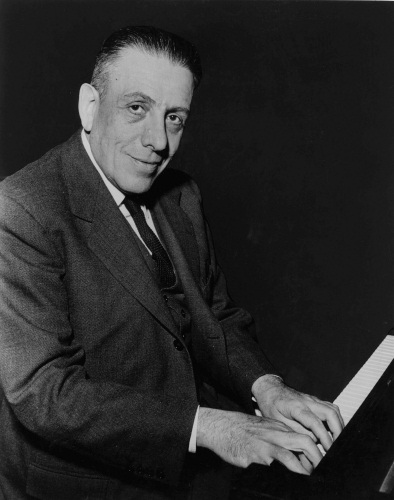
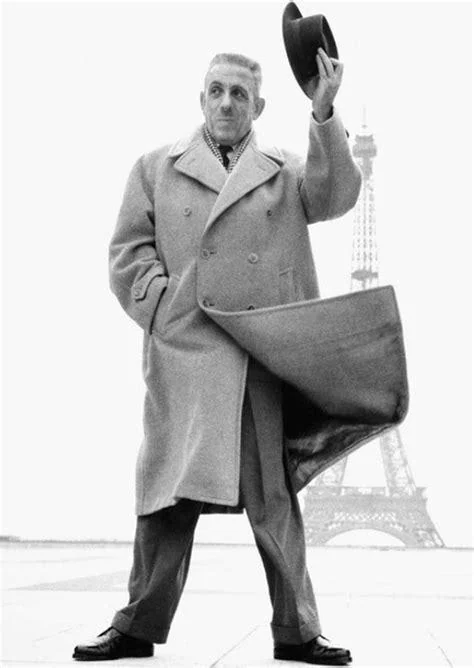
[High Quality Piano Accompaniment] Francis Poulenc (1899–1963), Les chemins de l’amour, FP 106 (1940) – Valse chantée

$11.00 $7.00

Francis Poulenc – “Les chemins de l’amour,” FP 106 (1940)

“Les chemins de l’amour” (“The Paths of Love”) is one of Francis Poulenc’s most lyrical and memorable mélodies, composed in October 1940 to a text by Jean Anouilh. The work originated as a valse chantée in Anouilh’s play Léocadia, and was dedicated to the celebrated French actress and singer Yvonne Printemps. The original stage version was written for solo voice with five musicians—clarinet, bassoon, piano, violin, and double bass.

The song occupies a distinctive place in Poulenc’s musical language. On the surface, it is an elegant and immediately attractive waltz. Beneath that graceful movement, however, lies a deeply reflective meditation on love, memory, separation, and the passage of time. The music looks back upon the paths once shared with a loved one and upon experiences that remain beautiful precisely because they belong to the past.

Poulenc does not express this nostalgia through monumental tragedy. Instead, he creates an atmosphere of elegance, intimacy, tenderness, and restrained melancholy. The sadness is made more poignant by the beauty and lightness of the waltz itself. The music seems to say that the past cannot be recovered, yet it can still be remembered with affection.

This combination of lightness and melancholy is characteristic of Poulenc’s artistic personality. His music can appear simple, graceful, even playful on the surface while concealing considerable emotional depth underneath. In Les chemins de l’amour, the elegant waltz does not contradict the sadness of the text; it is precisely the contrast between the two that gives the work its distinctive emotional character.

The voice is fundamental to the original conception of the piece. Poulenc writes the vocal line in close relationship with the natural movement of the French language. The melody does not simply present a sequence of beautiful sustained notes. It follows the rhythm, accents, pauses, and inflections of speech, allowing the singer to appear to be remembering and speaking through music.

This is one of the essential qualities of the French chanson: language becomes music without losing its character as language. The singer’s vowels, consonants, accents, and phrasing are part of the musical expression. The emotional meaning therefore emerges not only from pitch and harmony but also from the natural cadence of the spoken French sentence.

For this reason, Les chemins de l’amour should not be approached simply as a small operatic aria. Its expressive world is more intimate. The singer is not primarily demonstrating vocal power; the singer is communicating a memory. The musical line can therefore breathe, hesitate, yield, and move forward with the flexibility of human speech.

This characteristic becomes especially meaningful in the context of Yvonne Printemps, to whom the work was dedicated. Printemps was a major French actress and singer of the stage, associated particularly with theatre, operetta, musical theatre, and music-hall rather than with the conventional operatic tradition. She appeared as Amanda in the original Paris production of Léocadia, which opened at the Théâtre de la Michodière in November 1940.

Poulenc’s admiration for Printemps was not simply a matter of celebrity or theatrical popularity. In comments later quoted by Diapason, Poulenc described her with the famous phrase, “Yvonne Printemps chante comme elle respire”—“Yvonne Printemps sings as she breathes.” He also praised the way she guided her instinct, calling this one of the secrets of her lasting enchantment.

Poulenc went further in his assessment of her musicianship. He stated that she possessed an exceptional sense of legato, supported by impeccable breath, and that this gave everything she interpreted an invaluable human quality. He also suggested that she could have been incomparable in major operatic roles such as Manon, Louise, or Thaïs, but that she had chosen instead to devote her exceptional vocal gifts to operetta, which she elevated to an artistic level he regarded as unmatched.

These remarks are important for understanding the performance character of Les chemins de l’amour. Poulenc was not simply overlooking vocal technique in favor of spontaneity. On the contrary, his comments specifically emphasize legato and breath. What he admired was a technical foundation so completely integrated into artistic expression that the result sounded natural, instinctive, and human.

This is particularly relevant to the phrase “sings as she breathes.” It should not be interpreted as meaning that singing technique is unnecessary. Rather, it suggests that technique has become so deeply internalized that the listener no longer hears the mechanism behind the expression. The singer seems simply to speak, breathe, remember, and feel.

That quality is perfectly suited to Les chemins de l’amour. The song does not require the emotional rhetoric of a grand operatic aria. Its emotional world is closer to an intimate recollection. The singer seems to revisit places, moments, and emotions that once belonged to a shared life.

The waltz rhythm is therefore more than a rhythmic framework. It becomes a vehicle for memory. Its three-beat movement creates a gentle sense of circularity, as though the mind is returning repeatedly to the same memories. The music moves forward while psychologically looking backward.

This creates an important paradox:

the body of the music moves forward, while the mind of the music looks backward.

The waltz continues to turn, yet the subject is memory. This tension between movement and recollection gives the work much of its expressive identity.

The piano is consequently far more than a harmonic accompaniment. It establishes the temporal and emotional space of the memory. Its recurring waltz motion gives the music continuity, while its harmonic changes illuminate different shades of recollection.

The relationship between voice and piano should therefore be understood as a dialogue between memory and the world surrounding memory. The voice tells the story; the piano creates the space in which the story is remembered.

In the original stage conception, this relationship was even more colorful because the voice was surrounded by a small instrumental ensemble. The presence of violin, clarinet, bassoon, double bass, and piano created a chamber-like theatrical sound world rather than the sound of a conventional operatic orchestra.

For a violin arrangement, the violin assumes the role originally occupied by the voice. This creates an unusual but highly natural transformation: the violin becomes a wordless singer.

The violin should therefore not simply reproduce the pitches of the vocal line. It must preserve the expressive function of the original voice—its breathing, phrasing, speech-like inflection, hesitation, and emotional restraint.

A singer communicates the meaning of the French text through vowels, consonants, accents, and changes in vocal color. The violin has no words, so these functions must be translated into bow speed, articulation, vibrato, dynamics, timing, tone color, and the direction of the phrase.

The violinist should therefore imagine the melody as something that is being spoken through the instrument. Each phrase should have a destination, each hesitation should have a reason, and each release should feel like a natural continuation of thought.

This is particularly important because Poulenc’s tempo markings do not describe mechanical changes of metronome speed alone. Indications such as librement, céder, au mouvement, Più mosso, Animato, and molto ritard. describe changes in the character and direction of musical time.

A céder, for example, can be understood as a momentary yielding—a slight relaxation or hesitation within the continuing flow. Au mouvement restores the movement. Più mosso and Animato can make the remembered world suddenly become more vivid, while molto ritard. allows that world gradually to recede.

The performer must therefore distinguish between mechanical tempo and expressive musical time. The underlying waltz pulse must remain alive, but the surface of that pulse should breathe according to the phrase.

This is one of the central challenges for the pianist. The accompaniment must be sufficiently stable to provide a common temporal foundation, yet sufficiently flexible to respond to the violin’s phrasing. The pianist should not merely wait for the violinist’s changes; both musicians must anticipate the direction of the phrase.

The violinist and pianist should therefore think of the music as a shared movement through time. A small hesitation by one player must already be sensed by the other. A crescendo should not merely become louder; it should make the memory more vivid. An acceleration should not merely increase the BPM; it should make the remembered world come alive.

For the violinist, the deepest challenge is therefore not to imitate a singer’s sound but to recover the singer’s function.

The violin must become a voice without words.

It should retain the natural breathing of the French chanson, the subtle inflection of spoken language, and the restrained emotional character that makes Poulenc’s music so distinctive. Excessive vibrato, excessive portamento, or excessive romantic weight can easily transform the piece into something more operatic than Poulenc intended.

The pianist must likewise resist the temptation to turn the accompaniment into a heavy romantic background. The waltz should remain elegant, mobile, transparent, and alive. The harmony should provide emotional depth without becoming excessively sentimental.

The result should be a balance between movement and stillness, elegance and melancholy, speech and song, memory and present reality.

In this sense, Les chemins de l’amour is not simply a song about lost love. It is a musical representation of the way memory works. A person can return mentally to a place that no longer exists in the same form, experience its beauty again, and then allow the memory to disappear back into the present.

The song therefore moves through several emotional states: attraction, recollection, warmth, longing, intensification, hesitation, renewed movement, and finally withdrawal. The music does not need to become tragic because the essential emotional statement is more subtle:

the love has passed, but the beauty of having loved remains.

This is also why Yvonne Printemps is such an important part of the history of the work. The piece was not conceived in an abstract musical vacuum. It was written for a particular theatrical world and dedicated to a particular performer whose artistic identity combined singing, acting, speech, and stage presence. BnF explicitly records the dedication to Printemps, while contemporary documentation identifies her with the role of Amanda in the original Léocadia production.

Poulenc’s later comments about Printemps help illuminate what he valued in that performer: not technique isolated from expression, but technique transformed into apparent naturalness; not vocal display for its own sake, but legato, breath, instinct, language, and human presence working as one.

For this reason, a successful violin interpretation should preserve something of that same principle. The listener should not hear a violinist trying to demonstrate how beautifully the violin can sing. The listener should feel that the violin has something to remember and something to say.

In the original chanson, the French words give the memory its voice. In the violin arrangement, the melody itself must carry that memory.

The piano creates the world.

The violin remembers.

And the waltz keeps moving.

“Les chemins de l’amour” is ultimately a refined meditation on love, memory, time, longing, beauty, and acceptance, expressed through one of Poulenc’s most graceful musical forms. Its apparent simplicity conceals an extraordinary richness of human expression. The work lives between chanson and chamber music, between speech and song, between theatrical performance and intimate remembrance.

For singers, the work demands natural French diction, legato, breath, phrasing, and emotional restraint. For violinists, it demands the transformation of those vocal qualities into instrumental language. For pianists, it demands rhythmic stability without rigidity, harmonic sensitivity without heaviness, and an ability to create the temporal space in which the melody can breathe.

The ultimate goal is not simply to play the notes correctly.

It is to make the listener feel that a forgotten path has suddenly appeared again—and, for a few minutes, someone is walking along it once more.

High-Quality Piano Accompaniment
Suitable for Singers
Suitable for Violinists
Suitable for Instrumentalists
Ideal for Practice, Rehearsal, Recording, and Performance Preparation
Description


Francis Poulenc – “Les chemins de l’amour,” FP 106 (1940)

“Les chemins de l’amour” (“The Paths of Love”) is one of Francis Poulenc’s most lyrical and evocative mélodies, composed in 1940 to a poem by Jean Anouilh. The work originated as a valse chantée in Anouilh’s play Léocadia, where it was conceived for the stage and associated with the singer and actress Yvonne Printemps.

The song reflects upon the paths once walked with a loved one and the memories that remain after love has passed. Rather than presenting love as dramatic tragedy, Poulenc creates a world in which beauty, memory, longing, and loss coexist within an elegant waltz.

The voice is at the center of the original conception. Poulenc writes the vocal melody not simply as an abstract melodic line, but as a musical expression of French language. The words, their natural accents, their syllabic rhythm, and their emotional inflections are closely integrated into the melody.

The singer should therefore not approach the piece as though it were a conventional operatic aria. The vocal line often has the character of speech transformed into music. A phrase may gently advance, hesitate, yield, or accelerate according to the meaning and emotional direction of the words. The listener should feel that the singer is remembering and speaking through melody rather than merely displaying vocal technique.

This relationship between language and music is one of the defining characteristics of Poulenc’s chanson style. The French text remains an essential part of the musical expression. The melody gains much of its meaning from the natural inflection of the language, while the piano creates the harmonic and rhythmic environment in which the words can unfold.

For a singer, therefore, the essential task is not simply to produce a beautiful tone. The singer must preserve the clarity of the French text while allowing the musical phrase to breathe naturally. Consonants, vowels, syllabic emphasis, legato, and subtle changes of intensity must work together so that the listener can hear both the meaning of the words and the emotional movement behind them.

The characteristic waltz rhythm gives the song an immediately graceful and attractive surface. Beneath this apparent lightness, however, lies a profound sense of remembrance. The music seems to look backward toward a past that can no longer be recovered, allowing the listener to experience both the beauty of the memory and the sadness of its disappearance.

The piano plays a particularly important role in establishing this atmosphere. Rather than functioning merely as harmonic support, it creates the world of memory in which the voice exists. Its waltz rhythm provides continuity and movement, while its harmonic changes suggest the changing emotional perspective of someone remembering the past.

The relationship between voice and piano is therefore more than melody accompanied by harmony. The voice tells the memory, while the piano creates the space and movement in which that memory unfolds. At times the piano seems to carry the singer forward; at other moments it creates a moment of suspension in which the words can linger.

For a violin arrangement, the violin takes over the role originally given to the voice. This does not mean that the violin should simply reproduce the pitches of the vocal melody. It should preserve the expressive function of the singing voice—its phrasing, breathing, speech-like inflection, and emotional restraint.

The violin must therefore retain something of the natural inflection of the French voice. The rise and fall of the phrase, the gentle hesitation between words, the direction of the melodic line, and the feeling of an unspoken thought should remain audible even when the words themselves are no longer being sung.

The absence of actual words makes this especially challenging. A singer can communicate meaning through vowels, consonants, and verbal accents; the violin must communicate the same underlying structure through bow speed, articulation, vibrato, dynamics, timing, and tone color.

For the pianist, one of the greatest challenges is maintaining the characteristic waltz movement without making the rhythm mechanically regular. The music requires flexibility within continuity. The underlying pulse must remain perceptible, but the phrasing should breathe naturally through subtle changes of timing, articulation, dynamics, and harmonic emphasis.

This is particularly important in passages marked by indications such as librement, céder, au mouvement, Più mosso, Animato, and molto ritard. These markings should not be understood simply as instructions to change the metronome speed. They describe changes in the direction and energy of musical time.

The performer must therefore distinguish between mechanical tempo and expressive musical time. A slight yielding of tempo can represent hesitation, recollection, or emotional suspension, while the return au mouvement restores the forward flow. Later acceleration can make the remembered world suddenly vivid and alive, while the final ritardando allows that memory gradually to recede.

For a violin arrangement, this flexibility becomes especially significant. The violinist and pianist must anticipate one another rather than simply react after hearing a tempo change. Their coordination depends on shared phrasing, breathing points, harmonic awareness, and an intuitive understanding of where the musical line is moving.

The violin should therefore sound as though it is remembering rather than merely playing a melody. Its tone should remain lyrical and expressive, but the emotion should be controlled rather than exaggerated. The goal is not to imitate an operatic aria, but to preserve the intimate, speech-like quality of Poulenc’s chanson.

The pianist must also avoid excessive weight. The accompaniment should preserve the lightness and transparency of the waltz while giving sufficient harmonic depth to support the melody. Too much rhythmic emphasis can make the music sound like an ordinary salon waltz; too much sentimentality can obscure its refined French character.

The central expressive principle of the work can therefore be understood as elegant remembrance. The music does not attempt to remain permanently inside the past. Instead, it allows the singer—or, in this arrangement, the violinist—to enter the world of a remembered love, experience its beauty again, and then gradually return to the present.

In this sense, Les chemins de l’amour is both a song of love and a song about memory itself. The paths of love exist now as recollection: beautiful because they were lived, and poignant because they cannot be lived again in exactly the same way.

For the singer, the words make this memory explicit. For the violinist, the melody must make the same memory audible without words. The violin therefore becomes a wordless voice, carrying the emotional and rhetorical character of the original chanson.

For the violinist and pianist, the goal is not simply to reproduce the notes and rhythms accurately, but to recreate the changing movement of memory—its moments of clarity, hesitation, warmth, acceleration, and disappearance.

“Les chemins de l’amour” is ultimately a refined meditation on love, memory, time, longing, and acceptance, expressed through the graceful form of a French waltz. Poulenc transforms the apparently simple language of the chanson into music of remarkable emotional depth, where the voice, piano, and waltz rhythm work together to create a world in which elegance and melancholy exist together without contradiction.

High-Quality Piano Accompaniment
Suitable for Singers
Suitable for Violinists
Suitable for Instrumentalists
Ideal for Practice, Rehearsal, Recording, and Performance Preparation

Reviews

There are no reviews yet.

Be the first to review “[High Quality Piano Accompaniment] Francis Poulenc (1899–1963), Les chemins de l’amour, FP 106 (1940) – Valse chantée”

Your email address will not be published. Required fields are marked *